

-

-
Industry

-
-
-

-
Career Development

-
-
-



Embracing Generative AI: ASEAN Enterprises Enter a New Phase
Published Time:
2025-10-23 09:31
Source:

(Singapore, October 27, 2025) — With the rapid advancement of Generative Artificial Intelligence (Generative AI or GenAI), enterprises across Southeast Asia are accelerating their adoption of this transformative technology. According to a recent report released by International Data Corporation (IDC), more than 91% of surveyed ASEAN enterprises believe they will experience disruptive impacts from Generative AI within the next 18 months. Currently, about 16% of companies have already integrated GenAI into their daily operations, while the remaining organizations are still in the testing and evaluation stages. This indicates strong confidence in the potential of AI and an active pursuit of practical applications across business functions.
The report highlights that regional enterprises commonly rely on public cloud Infrastructure-as-a-Service (IaaS) to handle AI workloads, while investments in edge computing are steadily increasing to support remote operations and data control. IDC forecasts that by 2028, global spending on public edge cloud services will reach USD 29 billion, with a compound annual growth rate (CAGR) of 17%. By 2027, an estimated 80% of Chief Information Officers (CIOs) are expected to adopt edge services from cloud providers to meet the growing demands of AI inference performance and regulatory compliance. This trend underscores that a centralized cloud architecture alone can no longer fully address enterprises’ expanding requirements for scale, speed, and compliance.
Industry experts believe that to remain competitive amid the AI revolution, enterprises must reimagine their infrastructure strategies and incorporate a hybrid approach that integrates cloud and edge computing. Particularly in the Asia-Pacific region, where data volumes are growing rapidly and compliance requirements are tightening, organizations must build agile and secure intelligent architectures to stay resilient in the evolving technological landscape.
The commercial value of artificial intelligence is also becoming increasingly evident. Manik Bhandari, EY ASEAN Data and AI Leader, recently shared real-world examples from Singapore-based companies during a briefing session. He revealed that a real estate-related enterprise is leveraging AI systems to automatically organize invoice data and identify deductible tax items based on the Inland Revenue Authority of Singapore (IRAS) regulations—helping the company save several million dollars annually in tax costs. Another local engineering firm applies AI to analyze procurement spending, identify consolidation opportunities, and improve operational efficiency, achieving cost savings of up to SGD 50 million per year. Bhandari emphasized that these examples demonstrate how AI is not designed to replace humans but to unlock new value by enhancing business efficiency and financial transparency.
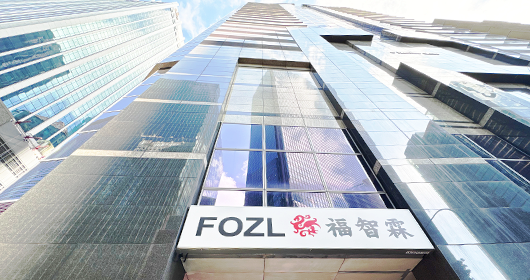
In light of this trend, FOZL Group believes that the rise of Generative AI presents new opportunities for corporate governance, accounting, and tax management. As a Singapore-based professional firm specializing in corporate advisory and accounting services, FOZL has been closely monitoring the practical applications of AI in enterprise management, financial optimization, and compliance processes.
Leveraging its extensive experience in audit, taxation, corporate governance, and risk compliance, FOZL supports businesses in building a solid financial foundation for digital and AI-driven transformation. Looking ahead, the Group will continue to track developments in Generative AI and automation technologies, actively guiding enterprises toward sustainable growth in a technology-driven economy and partnering with clients to embrace the new era of the intelligent economy.
Related News
Singapore Office:6 Raffles Quay, #14-02——#14-07, Singapore 048580
Tel:+65 6717 0088
E-mail:marketing51@fozl.sg
Follow Us
Singapore 201101725E Germany DEB8536.HRB730998 Malaysia 202201006785 (1452482-W) China