

-
-
Industry

-
-
-

-
Career Development
-
-
-



Singapore Advances Carbon Credit Financing to Drive Asia’s Low-Carbon Transition
Published Time:
2025-10-22 15:19
Source:

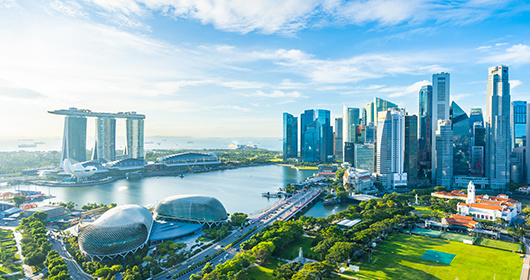
Singapore, October 23, 2025 — Singapore’s first Climate Action Ambassador and former Managing Director of the Monetary Authority of Singapore, Meng Wen-neng, stated that Singapore is committed to achieving net-zero emissions while actively promoting global climate action. Through innovative carbon credit financing mechanisms, Singapore aims to assist Asian countries in accelerating their transition toward a low-carbon economy.
Meng highlighted that Singapore is piloting the use of Energy Transition Credits (ETCs) as a reliable financing tool to help regional economies gradually phase out coal and other high-emission energy sources. The mechanism not only provides carbon credits but also offers financial support for energy transition projects, creating practical pathways for countries to achieve decarbonization targets.
Speaking at the seminar “From Paris to Belém: From Negotiation to Implementation,” Meng revealed that the Coalition to Grow Carbon Markets, jointly chaired by representatives from Singapore, Kenya, and the United Kingdom, will release a set of common principles at the 30th United Nations Climate Change Conference (COP30) in Belém, Brazil. These principles are designed to guide the voluntary use of high-integrity carbon credits and ensure consistent practices across jurisdictions. Established during London Climate Action Week in June, the coalition is the world’s first government-led platform for carbon market development.
Meng emphasized that establishing a robust supply of high-integrity carbon credits is essential for promoting international climate finance and supporting the global energy transition. To date, Singapore has signed carbon credit cooperation agreements with 10 partner countries, and entered into contracts for 2.175 million tonnes of carbon credits across four projects in Ghana, Paraguay, and Peru, aimed at reducing deforestation, promoting reforestation, and protecting biodiversity.
Marking the tenth anniversary of the Paris Agreement, Meng urged all nations to submit credible 2035 Nationally Determined Contributions (NDCs), enhance public-private cooperation to provide climate finance for developing countries, and promote low-carbon technologies through international collaboration. He noted that 2024 has become the hottest year on record, with global sea levels rising approximately 10 centimeters since 1990—the fastest increase in the past 3,000 years—and polar and glacier melting exceeding scientific expectations. Governments and societies must accelerate the implementation of climate commitments despite political and economic uncertainties.
Singapore’s push for carbon credit and energy transition financing is expected to open broad economic and industrial opportunities across the region. Carbon market development, green finance, renewable energy, forest conservation, and climate technology are among the sectors poised for growth. Carbon credits are emerging not only as compliance tools but also as catalysts for green investment, channeling capital into sustainable projects and supporting regional green economic growth.
This trend also encourages companies to explore new international collaboration and investment opportunities. As green finance and sustainable projects become global economic drivers, businesses increasingly need support in navigating overseas policies, carbon market frameworks, and cross-border compliance. Leveraging its regional hubs in Singapore, Malaysia, China, and Germany, Fozl Group assists companies in identifying opportunities in green investment, low-carbon transformation, and international project development. Through strategic advisory, resource linkage, and market access facilitation, Fozl helps enterprises capture opportunities in carbon credit markets and the global green economy.
Related News
Singapore Office:6 Raffles Quay, #14-02——#14-07, Singapore 048580
Tel:+65 6717 0088
E-mail:marketing51@fozl.sg
Follow Us
Singapore 201101725E Germany DEB8536.HRB730998 Malaysia 202201006785 (1452482-W) China