

-

-
Industry

-
-
-

-
Career Development

-
-
-



Everything you need to know about setting up and succeeding in Singapore
Accounting audit
Singapore Financial Reporting Standards
Background
Business entities around the world report their financial performance through financial reporting. Historically, the format of financial reporting varied from country to country, with each country's financial reporting practices following a set of principles, rules, or conventions that evolved from that country's political, legal, economic, and cultural environment. As a result, financial reporting often lacked international understanding and acceptance.
In today's globalized world, comparable, transparent, and reliable financial information is fundamental to the smooth functioning of global capital markets. Therefore, due to the dramatic increase in multinational corporations, foreign direct investment, cross-border securities purchases and sales, and the number of foreign securities listed on stock exchanges, the need for comparable financial reporting standards has become paramount.
What are Accounting Standards?
Accounting standards consist of a set of principles and administrative practices that deal with various financial transactions. The main objective of accounting standards is to prescribe recognition, measurement, presentation, and disclosure requirements for significant transactions and events in general-purpose financial statements. These statements provide information about performance, condition, and cash flow that is useful to various users in making financial decisions. Users of financial statements include existing and potential investors, employees, lenders, suppliers and other trade creditors, customers, governments and their agencies, and the public. They use financial statements to meet their diverse information needs.
The most important driving force in the development of international accounting standards is the International Accounting Standards Board (IASB)—an independent accounting standard-setting body of the International Financial Reporting Standards Foundation. The broad objective of the IASB is to further harmonize accounting practices and promote their acceptance worldwide through the development of accounting standards. International Financial Reporting Standards (IFRS), issued by the IASB, are widely used as a benchmark for measuring the financial health of businesses. The framework is of high reliability and quality, but it is lengthy and complex.

Singapore Financial Reporting Standards (SFRS)
In Singapore, accounting standards are known as the Singapore Financial Reporting Standards (SFRS), which are based on International Financial Reporting Standards. All Singapore registered companies that commenced their financial year on or after 1 January 2003 Singapore registered companies are required to comply with the financial reporting standards.
Accrual accounting is one of the main principles of Singapore accounting standards. Financial statements are prepared on the basis of accrual accounting. Under this basis, the effects of transactions and other events are recognized when they occur (rather than when cash or cash equivalents are received or paid) and are recorded in the accounting records and reported in the financial statements for the relevant period. Financial statements prepared on an accrual basis inform users not only of past transactions involving cash receipts and payments but also of obligations to pay cash in the future and of resources representing cash to be received in the future.
The complete set of accounting standards in Singapore comprises approximately 41 different standards, each referred to as FRS X, for example, FRS 1. Each standard covers a specific topic such as the presentation of financial statements, the recognition of revenue, the accounting for inventories, etc.
Singapore Financial Reporting Standards for Small Entities
In an ever-changing and demanding world, accounting standards are becoming increasingly complex. This makes it increasingly difficult for small businesses to confidently consider themselves compliant. Compliance with the full SFRS is difficult for small and medium-sized entities (SMEs) as they find the requirements burdensome on their precious few resources. As in many other countries, SMEs constitute the majority of companies operating in Singapore.
To meet the special needs of SMEs internationally, the IASB issued the International Financial Reporting Standard for SMEs specifically for SMEs in 2009. Following this, the Accounting Standards Council (ASC) in Singapore also issued the Singapore Financial Reporting Standards for Small Entities (SFRS for SE) in November 2010.
The Singapore Financial Reporting Standards for Small Entities (SFRS for SE) is an alternative framework to the full Singapore Financial Reporting Standards. Closely aligned with the International Financial Reporting Standard for SMEs, the small entities financial reporting standards were issued after detailed consultation with stakeholders. It provides an optional financial reporting standard for small entities for reporting periods beginning on or after 1 January 2011.
The objective of the Singapore Financial Reporting Standards for Small Entities (SFRS for SE) is to provide some relief to small companies in Singapore while ensuring quality, transparency, and comparability in complying with the full Singapore accounting standards, which can benefit the investment community and other users of financial statements.
Requirements for Applying the Singapore Financial Reporting Standards for Small Entities (SFRS for SE)
Singapore registered companies or Singapore branches of foreign companies are eligible to apply the Singapore Financial Reporting Standards for Small Entities. They need to meet several criteria:
The company is not accountable to the public
The company issues general purpose financial statements for external users
The company must meet at least two of the following three criteria to be considered a small entity:
The company's total annual revenue does not exceed S$10 million
The company's total assets do not exceed S$10 million
The company's total number of employees does not exceed 50
It must be noted that the Singapore Financial Reporting Standards for Small Entities SFRS came into effect on 1 January 2011. To meet the simplified eligibility criteria, small entities must meet the above criteria in each of the two preceding years. Entities that meet the criteria may follow the standard until their size exceeds the thresholds in two consecutive reporting periods, in which case the company must follow the full Singapore Financial Reporting Standards SFRS.
Subsidiaries of a holding company that follow the full Singapore Financial Reporting Standards may also apply the Singapore Financial Reporting Standards for Small Entities provided they meet the above criteria.
Differences between SFRS and SFRS for SE
With the SFRS for SE specifically for small entities, companies that meet the new standards must consider several key points before deciding whether to adopt SFRS or SFRS for SE. Before adopting these standards, companies should also review their growth plans and business nature.
Some issues that need careful consideration are:
Conversion costs - training costs, accounting systems and software
Future plans - the possibility of the enterprise exceeding the size threshold in IPO plans
Group companies need to consider - the impact on the holding company
Financing - financial institutions and lenders often require viewing Singapore financial reports that follow the full SFRS specifications
Companies nearing the scale threshold should best adhere to full SFRS rather than wavering between standards. Similarly, companies accustomed to using full SFRS, those belonging to groups or parent companies that follow full SFRS, and those that would be negatively affected by the treatment of certain accounting elements under the simplified version must avoid adopting SFRS for SE.
In short, the new Singapore reporting standards for small entities are ideal for Singapore startups, companies that find full SFRS problematic, and those whose statements are not used by external parties.
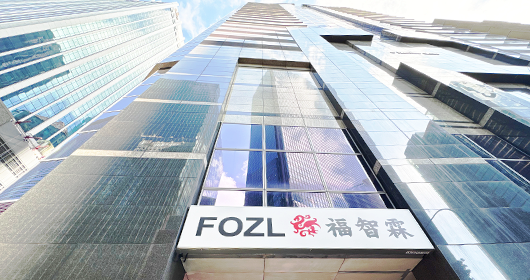
As a corporate advisory firm licensed by ACRA, the Accounting and Corporate Regulatory Authority of Singapore, FOZL boasts a strong team of Singapore corporate accountants capable of providing comprehensive services to Singapore registered companies of various sizes and industries, including: financial outsourcing services, Singapore company registration and maintenance services (Singapore company secretary, Singapore corporate account opening, annual audit and reporting, etc.), Singapore trademark registration services, Singapore tax reporting, Singapore tax reduction and exemption consultation, professional license application consultation, and in-depth services such as consultation on Singapore enterprise support policies. For more information on Singapore Financial Reporting Standards, please contact our customer service.
Financial Statement Compliance Requirements
Financial reports must comply with the requirements of the Singapore Financial Reporting Standards in many aspects.
Directors' Statement:
Recipient of the Directors' Statement
If the company has only one shareholder, the term "To the shareholder" should be used.
Directors' Opinion
When events or circumstances arise that cast significant doubt on the company's ability to meet its obligations, the directors' opinion should be amended accordingly and appropriately disclosed.
Signing the Directors' Statement
If the company has two or fewer directors, it is not necessary to use the term "on behalf of the Board".
If the company has two directors, it is recommended to use "The Board". If the company has only one director, it is recommended to use the term "Sole Director".
Date of the Directors' Statement
The directors' statement should be sent to all persons entitled to receive notice of the company's annual general meeting (AGM) at least 14 days prior to the AGM. Such directors' statement should be made pursuant to a resolution of the directors which specifies the date on which such statement is made and is signed on behalf of such directors by two directors of the company, and contains the information set out in Schedule 12 to the Singapore Companies Act.
The annual general meeting of a non-listed company should be held within six months of the end of its financial year, unless the company meets the requirements of Section 175A of the Singapore Companies Act.
Directors' Interest in Shares or Debentures
A director or chief executive officer of the company shall be deemed to have an interest or right in any shares or debentures in the following circumstances:
The director's or chief executive officer's (as the case may be) wife or husband (who is not himself or herself a director or chief executive officer) has an interest or right in any shares or debentures; or
The director's or chief executive officer's (as the case may be) child under the age of 18 (who is not himself or herself a director or chief executive officer) has an interest in shares or debentures.
"Child" includes stepchild, adopted child, stepson, and stepdaughter.
If a director resigns after the end of the financial year but before the date of the directors' statement, his or her interest as at the end of the financial year must still be disclosed.
If no director holds any shares or debentures of the company or any related corporation, it is recommended to disclose as follows:
None of the directors of the company in office at the reporting date had any interest in any shares or debentures in the company or any related corporations at the beginning or at the end of the financial year.
A director shall be deemed to have an interest in a related corporation if that director has the power to exercise or control the exercise of not less than 20% of the voting power of that corporation.
If the company is a wholly-owned subsidiary of another company (i.e., the holding company), then the company, in relation to the directors of that other company, shall be deemed to have complied with the requirements of Section 164 of the Singapore Companies Act if the particulars shown in its register are shown in the register of the holding company.
Share Options
Details of share options issued by the company shall be disclosed:
(i) Any company, other than a holding company required to submit consolidated financial statements, has granted any options to subscribe for the unissued shares of that company during the period covered by the financial statements -
(a) the number and class of shares for which "options" have been granted;
(b) the expiry date of the options;
(c) the basis upon which the options are exercisable; and
(d) whether the persons to whom "options" have been granted have the right by virtue of the "options" to participate in any issue of shares of any other company.
(ii) Where any of the foregoing details have been disclosed in a previous directors' statement, reference may be made to that statement.
(iii) Details of shares issued as a result of exercising options to subscribe for unissued shares of the company during the period covered by the statement (whether the options were granted before or during the period).
(iv) The number and class of unissued shares, the price or the method of determining the price at which those shares will be issued, the expiry date of the options, and whether the grantees of the options have been granted the option to participate in any other company's share issue.
Resignation of Directors
This regulation does not require details of directors who resigned during the financial year and before the directors' statement was issued.
If a director resigns after the end of the financial year but before the date of the directors' statement, their interest at the end of the financial year should still be disclosed.
Amending Defective Financial Statements
The directors may amend the company's financial statements for any financial year of the company. The amendment is limited to those aspects of the financial statements that do not comply with the requirements of the Singapore Companies Act. The amended financial statements must be accompanied by a new directors' report and auditor's report.
Independent Audit Report
Other Information
The section "Other Information" should be amended accordingly when the auditor considers that the other information contains material misstatements.
For many privately held companies, the directors' statement may be the only document that constitutes other information. If the company issues an annual report, the "Other Information" section should be customized accordingly.
When preparing financial statements for discontinued operations, the provisions of the preceding paragraph shall be replaced by the following provisions:
Regarding the determination of whether management has properly used the going concern accounting basis. When this use is inappropriate, and management adopts an accounting alternative basis, we can determine whether this alternative is acceptable. We also need to assess the adequacy and reasons for the information disclosure. Our conclusions are based on audit evidence up to the date of our auditor's report.
Summarizes the appropriateness of management's use of the accounting going concern basis. When this use is inappropriate, and management uses an alternative accounting basis, we conclude whether the alternative basis used by management is acceptable in this case. We also assessed the adequacy of disclosures, described the alternative basis and reasons for use. Our conclusions are based on audit evidence obtained up to our auditor's report.
Key Audit Matters
The regulations on conveying key audit matters in the independent auditor's report apply to audits of a complete set of general-purpose financial statements for listed entities. In the glossary of terms of the recognized stock exchange, a listed entity is defined as "an entity whose shares, stocks or debts are listed or listed on a recognized stock exchange, or listed under the regulations of a recognized stock exchange or other equivalent institution". Therefore, the Key Audit Matters (KAMs) report also applies to entities that trade bonds or notes on the Singapore Exchange or other recognized stock exchanges.
Key Audit Matters (KAMs) are the most important matters in financial statement audits and are selected from matters communicated to those charged with governance.
Auditors of non-listed entities may choose to communicate key audit matters on a case-by-case basis.
Auditor's Responsibilities Related to Other Information
The Accounting Standards define other information as financial or non-financial information included in an entity's annual report.
For example, when the directors believe that the financial statements provide a true and fair view of a company's financial position, but the auditors issue a qualified opinion due to material misstatements in the financial statements. In this case, for material inconsistencies that cause the existence of qualified opinions, the auditors are required to report accordingly in the "Other Information" section.
Financial Statement Titles
Financial Reporting Standard 1: Allows entities to use titles for statements other than those specified in Financial Reporting Standard 1.
In the first year of appointment as auditor, if there is a change of auditor, "Other Matters" should be added after the "Basis of Opinion" section, disclosing in this section that the company's financial statements were audited by another audit firm, which issued an unmodified/modified opinion*(fill in the date of the auditor's report issued by the former auditor)*. The nature and impact of the modified opinion should also be included.
Statement of Profit or Loss and Other Comprehensive Income
Speech
In the application of Financial Reporting Standard 1, the company has chosen a single statement of profit or loss and other comprehensive income, and the expenses are functionally analyzed.
Alternatively, if the information provided is reliable and more relevant, the company may provide an analysis of expenses by nature.
Other Comprehensive Income
In this set of illustrative financial statements, other comprehensive income refers to the net gain on fair value obtained through other comprehensive income of equity instruments, which is not reclassified to profit or loss. Where applicable, the company must submit items of other comprehensive income in accordance with Financial Reporting Standard 1, which are divided into items that will not be reclassified to profit or loss after meeting certain conditions and items that will be reclassified to profit or loss after meeting certain conditions.
Share of Profit/(Loss) of Joint Ventures
"Share of profit/(loss) of joint ventures" is the net amount after listing the tax and non-controlling interests of joint ventures.
Reclassification Adjustments
Reclassification adjustments are adjustments to other comprehensive income that were previously recognized and are now reclassified to profit or loss. Reclassification adjustments may be presented in the statement of profit or loss and other comprehensive income or in the notes. Entities that present reclassification adjustments in the notes present the other comprehensive income items after any relevant reclassification adjustments.
Separate Disclosure of Income and Expense Items
Material items of income or expenses shall be disclosed separately showing their nature and amount. Circumstances that would lead to the separate disclosure of income and expense items include:
(a) Write-down of inventories to net realizable value, or write-down of property, plant and equipment to recoverable amount, and reversal of such write-downs;
(b) Restructuring of an entity's activities, any provision for restructuring costs;
(c) Disposal of property, plant and equipment;
(d) Disposal of investments;
(e) Discontinued operations;
(f) Settlement of litigation;
(g) Reversal of other items.
Statement of Financial Position
Submission of a Third Statement of Financial Position
After implementing retrospective accounting policies, an entity must submit a third statement of financial position at the beginning of the earliest comparative period, retrospectively restating the items in its financial statements, or reclassifying the items in its financial statements when implementing retrospective application. Retrospective restatement or reclassification has a material impact on the information in the statement of financial position at the beginning of the earliest comparative period.
Except for the accounting statements required by Financial Reporting Standard 1: 41-44 and 8, accounting policies, changes in accounting estimates and errors, the entity is not required to submit related notes to the statement of financial position opening at the beginning of the earliest comparative period.
Current and Non-Current Liabilities
If a financial liability is to be settled within 12 months of the reporting period, even if the original term exceeds 12 months, the entity classifies it as a current liability, and an agreement for long-term refinancing or rearrangement of payments is completed within the reporting period and before the authorization for the issuance of financial statements.
If the entity expects and has the right to refinance or extend the debt for at least 12 months within the reporting period under existing loan arrangements, the debt is classified as non-current debt; otherwise, the debt will mature within a shorter period. However, when debt refinancing or extension is not at the entity's own discretion (e.g., there is no refinancing arrangement), the entity does not consider the possibility of debt refinancing and classifies the debt as current debt.
When a breach of a long-term loan agreement occurs or a demand for immediate payment arises before the end of the reporting period, the entity is considered liable at that time, even if the lender agrees to address the issue in the financial statements before the reporting period and authorization, without requiring immediate payment due to the breach. The entity classifies the debt as current because it does not have an unconditional right to defer settlement for at least 12 months after the end of the reporting period.
However, an entity classifies a debt as non-current if the lender agrees to provide a grace period within the reporting period ending at least twelve months after the reporting period, during which the entity can correct the breach, and the lender cannot demand immediate repayment.
Leases
Financial Reporting Standard 116:47 requires lessees to disclose right-of-use assets separately from other assets and lease liabilities separately from other liabilities in the statement of financial position or in the notes. If the lessee does not present right-of-use assets separately in the statement of financial position, the lessee must include the right-of-use assets in the same line items as the underlying assets would be presented if they owned them (e.g., in Property, Plant and Equipment). It is required in the statement to disclose which line items in the statement of financial position include right-of-use assets. Similarly, if the lessee does not present lease liabilities separately in the statement of financial position, the lessee also needs to disclose in the statement of financial position the line items which include the lease liabilities.
Audit Requirements
What is an Audit?
The term audit usually refers to a financial statement audit. A financial audit is an objective examination and evaluation of an organization’s financial statements to ensure that financial records fairly and accurately reflect the transactions they claim to represent. Audits can be conducted internally by the organization’s employees or externally by a registered accounting firm.
There are three main types of audits:
External audits, internal audits, and tax audits.
External audits are typically performed by Certified Public Accountant (CPA) firms and result in an auditor’s opinion which is included in an audit report. An unqualified or clean audit opinion means that the auditor found no material misstatements after reviewing the financial statements. External audits can include reviews of financial statements and the company’s internal controls. Internal audits can serve as a management tool to improve procedures and internal controls.
External Audit
Audits performed by external entities are very helpful in eliminating any bias when reviewing a company’s financial status. Financial audits are designed to identify any material misstatements in financial statements. An unqualified or clean audit opinion provides users of the financial statements with confidence that the financial data is accurate and complete. Therefore, external audits enable stakeholders to make better and more informed decisions about the audited company. External auditors follow a separate set of standards from the company or organization that hires them. The biggest difference between an internal and external audit is the concept of independence of the external auditor. When the audit is done by a third party, the opinion provided by the auditor on the subject being audited (company's finances, internal controls or systems) can be honest without affecting the day-to-day working relationships within the company.
Internal Audit
Internal auditors are employed by the company or organization that they are auditing, and resulting audit reports are directly provided to management and the board of directors. Consultant auditors, although not employed internally, use the standards of the company they are auditing rather than a separate set of standards. These types of auditors are used when an organization lacks internal resources to audit certain parts of their business.
Internal audit results are used to implement management changes and improvements to internal controls. The goal of internal auditing is to ensure compliance with laws and regulations and to help maintain accurate and timely financial reporting and data collection. It also benefits management by identifying weaknesses in internal controls or financial reporting before they are reviewed by external auditors.
Tax Audit
Tax authorities may periodically select companies for a review of their tax filings, depending on the circumstances. Tax authorities also have the power to require a company to undergo a tax audit to verify the accuracy of the taxpayer’s declarations and specific transactions. When the tax authorities audit an individual or company, it usually carries a negative connotation but it does not necessarily indicate wrongdoing.
Audit Principles
Audits rely on a set of principles to help make them effective and reliable tools in supporting management policies and controls. Audits provide information to organizations so that action can be taken to improve their business performance.
1. Integrity: The foundation of professional conduct.
2. Fair Presentation: The obligation to report truthfully and accurately.
3. Due Professional Care: Application of diligence and judgment in the audit.
4. Confidentiality: Information security.
5. Independence: The basis for the impartiality of the audit and objectivity of audit conclusions.
6. Evidence-based: Reasonable methods for arriving at reliable and repeatable audit conclusions in a systematic audit process.
Previous Page
Next Page
Relevant Knowledge
Singapore Office:6 Raffles Quay, #14-02——#14-07, Singapore 048580
Tel:+65 6717 0088
E-mail:marketing51@fozl.sg
Follow Us
Singapore 201101725E Germany DEB8536.HRB730998 Malaysia 202201006785 (1452482-W) China