

-
-
Industry

-
-
-

-
Career Development
-
-
-



Headquarters
Published Time:
Source:
Riding the wave of Asian economic growth
Asia: A Land of Opportunity
Asia has become a major engine of global economic growth. By 2030, the region's middle class will account for more than half of the world's population and will be a major source of consumer demand. An increasing number of Fortune 500 companies are headquartered in Asia, reflecting Asia's rapid rise: between 2000 and 2015, the number of such companies increased more than threefold, now accounting for over one-third of the Fortune 500 list.

The ideal location for in-depth observation of Asian consumers and strategic development
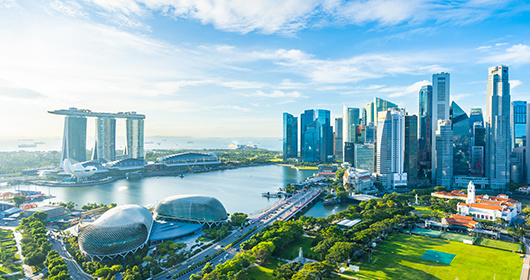
Multinational companies looking to deepen their presence in Asia can leverage Singapore as the ideal location to gain deep consumer insights and develop product strategies for local markets. Leading service providers have built more capabilities to understand the unique complexities of Asian consumers. The Nielsen Innovation Centre and McKinsey’s Asia Consumer Insights Centre are examples of such capability development programs by service providers.

Utilize experienced cross-functional talent
Independent research by AON and KPMG in 2018 showed that Singapore has the highest concentration of Fortune 500 company headquarters positions compared to other major Asian hubs. As one of the most concentrated brand marketing hubs in the Asia-Pacific region, companies such as MasterCard, P&G, Intel, Phillips, and Unilever have chosen to develop digital professionals and regional brands in Singapore. According to the 2018 Global Talent Competitiveness Index, Singapore's talent is leading across various fields in the Asia-Pacific region. In the supply chain management field, our top universities have strong research focuses and transformation initiatives, such as the partnership between Singapore Management University and DHL's green transformation laboratory.

Building Asia's innovation ecosystem
In Singapore, companies can engage in strategic dialogue with decision-makers of key partners. The high concentration of headquarters, centers of excellence, research centers, and a vibrant entrepreneurial ecosystem offer companies ample opportunities to collaborate and quickly discover cutting-edge solutions. For example: In May 2018, Hewlett Packard Enterprise launched the InnovateNext incubation program, aiming to achieve technological innovation and commercialization for clients and local startups. Deloitte, EY, PwC, and Accenture are also collaborating with companies to improve headquarters operations and insight capabilities for better decision-making.
"The ecosystem is a condition for the hub to thrive. You can set up headquarters anywhere, but if these entities remain the same, they will become obsolete. In Singapore, these entities are vibrant because the ecosystem is constantly evolving." —Magesvaran Suranjan, President of P&G Asia Pacific, Indian Subcontinent, Middle East and Africa

Unparalleled Connectivity with Asia
Singapore is the world's largest transshipment port, with half of the world's population within a 7-hour flight radius. In 2018, Changi Airport was awarded the title of Asia's most connected airport, with flights to 400 cities worldwide. In 2018, Singapore ranked first in the World Bank's Logistics Performance Index, and has been a world-class transportation and logistics hub for 50 consecutive years. Today, 20 of the world's top 25 third-party logistics providers (3PLs) operate regional or global businesses in Singapore.

Next Page
Related News
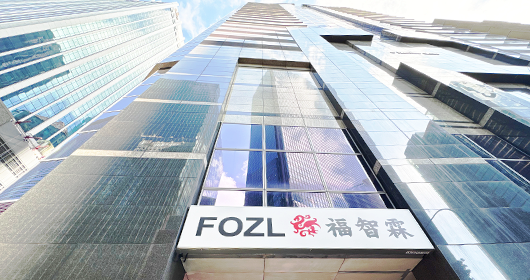
Singapore Office:6 Raffles Quay, #14-02——#14-07, Singapore 048580
Tel:+65 6717 0088
E-mail:marketing51@fozl.sg
Follow Us
Singapore 201101725E Germany DEB8536.HRB730998 Malaysia 202201006785 (1452482-W) China