



Urban Solutions and Sustainable Development
Urban Solutions and Sustainable Development
Smart City Solutions
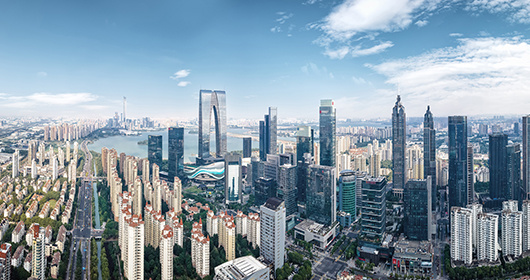
Market Size and Growth: In 2023, the market size of China's comprehensive smart city solutions industry was approximately 63.6 billion yuan. Benefiting from technological advancements, increasingly diversified scenarios, and government support, it has achieved rapid growth. With the enhancement of urban operational efficiency and the rising demand for quality of life among residents, this industry will continue to explore, practice, and develop in the future.
Industry Chain: The upstream involves technology and equipment suppliers such as big data, cloud computing, GIS, and visualization technologies; the midstream comprises comprehensive smart city solution providers who utilize upstream technologies to meet various needs and manage data; the downstream is applied to areas such as civil services, urban governance, industrial economy, and ecological livability.
Technology Applications and Development Trends: Emerging technologies such as the Internet of Things, cloud computing, big data, and artificial intelligence are widely used, driving the development of smart city solutions towards greater intelligence, efficiency, and humanization. For example, intelligent transportation systems utilize big data to achieve real-time monitoring and control of traffic flow, improving traffic efficiency.
Green, Low-Carbon, and Sustainable Development Solutions
Policy Promotion: Promoting "carbon peaking and carbon neutrality" has become an important strategic direction. The government has introduced multiple policies to encourage the construction of green and low-carbon cities, such as promoting the "carbon neutrality" concept in urban planning and driving the large-scale development of green and low-carbon buildings.
Solution Content
Energy Structure Optimization: Accelerate the optimization of the energy structure with new energy sources as the main body, vigorously develop advanced technologies such as photovoltaic power generation, wind power generation, and biomass energy, and build a modern sustainable power system.
Energy Saving, Emission Reduction, and Resource Recycling: Strengthen comprehensive energy saving and emission reduction efforts in various urban sectors, achieving full coverage in industries, transportation, construction, etc.; simultaneously, promote resource recycling and improve resource utilization efficiency.
Ecological Protection and Restoration: Increase the pace of afforestation and forest carbon sequestration across society, strengthen the construction and protection of urban ecology and green spaces, and explore mechanisms for ecological value conversion and marketization.
Industrial Ecology and Sustainable Development Solutions
Industrial Synergy and Circular Economy: Emphasizes the coordinated development of various industries within the urban socio-economic system. By constructing an industrial ecological chain, it achieves the recycling of resources among different industries, improves lifecycle efficiency, reduces waste emissions, and promotes the development of a circular economy.
Urban Metabolism and Resource Management: Conduct industrial ecological analysis of urban metabolism and urban subsystems such as food, transportation, and construction. Starting from multiple aspects such as improving production technology, upgrading dietary structures, and reducing losses and waste, it reduces the environmental impact of the food system; promotes the electrification and low-carbon transformation of transportation, strengthens the development of clean energy and research on the treatment of end-of-life waste from related equipment; and reduces carbon emissions and resource consumption of building materials through technological innovation and consumer-end management.
China Office:Room 802, 803, Building 24, Tengfei Suzhou Innovation Park, No. 388, Xinping Street, SIP, Suzhou
Tel:+86 0512 6696 0106106
E-mail:enquiry@fozl.sg
Follow Us